QCoat/Q300シリーズ
コーター
Quorum Technologies社(クォーラムテクノロジーズ)
卓上型コーティング装置「QCoat / Q300 Plusシリーズ」はラボ向けに開発された真空成膜装置で、
DCマグネトロンスパッタリング(イオンスパッタ)と、抵抗加熱によるカーボン蒸着が行えます。
他にも、親水化処理・真空蒸着・アパーチャークリーニングなどの機能を拡張することも可能です。
また、実験レベルでの薄膜や電極の形成などにも適しています。
AuやPtなどの貴金属ターゲット以外にも、CrやNi、Al、Wなどの酸化する金属ターゲット、
ITOのスパッタリングも可能であることから、簡便に使える卓上サイズのスパッタ装置として、小~中規模実験室向けに最適です。
QCoatシリーズは、高真空仕様(TMP搭載)と低真空仕様(RP)とに分類され、更に、スパッタリング/カーボン蒸着/マルチ(スパッタ and カーボン蒸着)
の3タイプがあります。
Q300 Plusシリーズは、2源異種ターゲット(交互)と3源ターゲット(同時)があります。
主な特徴
- 誰でも使える簡単操作
- 高真空・高品質成膜
- 多種ターゲットに対応
- 2源異種搭載可(交互)
- 多彩な成膜モード
- プロセスのフルオート化
- 回転ステージ標準搭載
- 多彩なステージ選択
- 膜厚(FTM)コントロール
- 真空シャットダウン機能
- 2源交互スパッタ(連続)
- 3源同時スパッタ(広範囲)
装置概要
卓上型コーティング装置「Qcoat/Q300シリーズ」は真空成膜装置で、 DCマグネトロンスパッタリングイオンスパッタ)と、抵抗加熱によるカーボン蒸着が行えます。他にも、親水化処理・ 真空蒸着・アパーチャークリーニングなどの機能を拡張することも可能です。
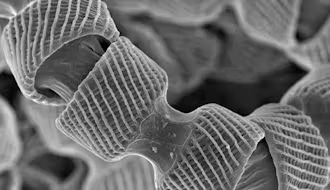
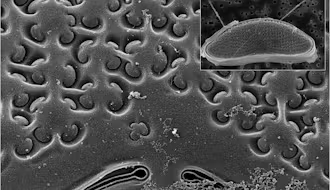
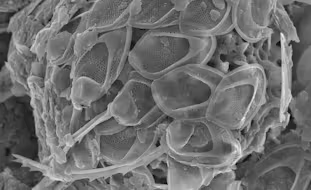
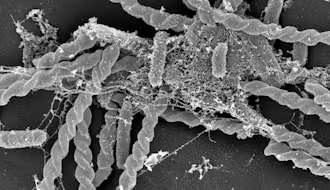
電子ビームをプローブとする分析装置において、試料の帯電防止等を目的とした導電性コーティングに 適しています。また、金属スパッタは試料の熱ダメージを低減し、二次電子放出率を高める効果もあります。 一般に数nm程度の薄い膜厚が求められますが、数十~数百nm程度の保護膜の形成にも使用できます。
カーボン蒸着はEDSやWDSなどの元素分析における導電性コーティングの他、TEMグリッドのカーボン支持膜の 作成などに使用されます。実験レベルでの薄膜や電極の形成などにも適しています。
AuやPtなどの貴金属ターゲット以外にも、CrやNi、Al、Wなどの酸化する金属ターゲット、ITOの スパッタリングも可能であることから、簡便に使える卓上サイズのスパッタ装置として、小~中規模実験室向けに最適です。
低温マグネトロンスパッタリング
TurboQ/Q300シリーズは、ターボ分子ポンプの圧力に最適化された低温強化プラズママグネトロンと、低電流および堆積コントロールを組み合わせることで 試料を保護し、均一なコーティングが可能です。また、酸化する金属および貴金属をスパッタリングするように設計され、簡単に交換できる円板状(直径57mm) のターゲットを使用します。他のターゲットオプションには、 Au、Au/Pd、Pt/Pd、Pd、Pt、Cu、Ir、W、ITO、Alなどがあります。
アルミニウムスパッタリング用専用クリーニングレシピアルミニウム(Al)は、除去が困難な酸化物層を急速に形成しますが、酸化物の除去時間を短縮して、ターゲットの過度のプレスパッタリングを 防止する特別なAlレシピを備えています。
2源交互スパッタ
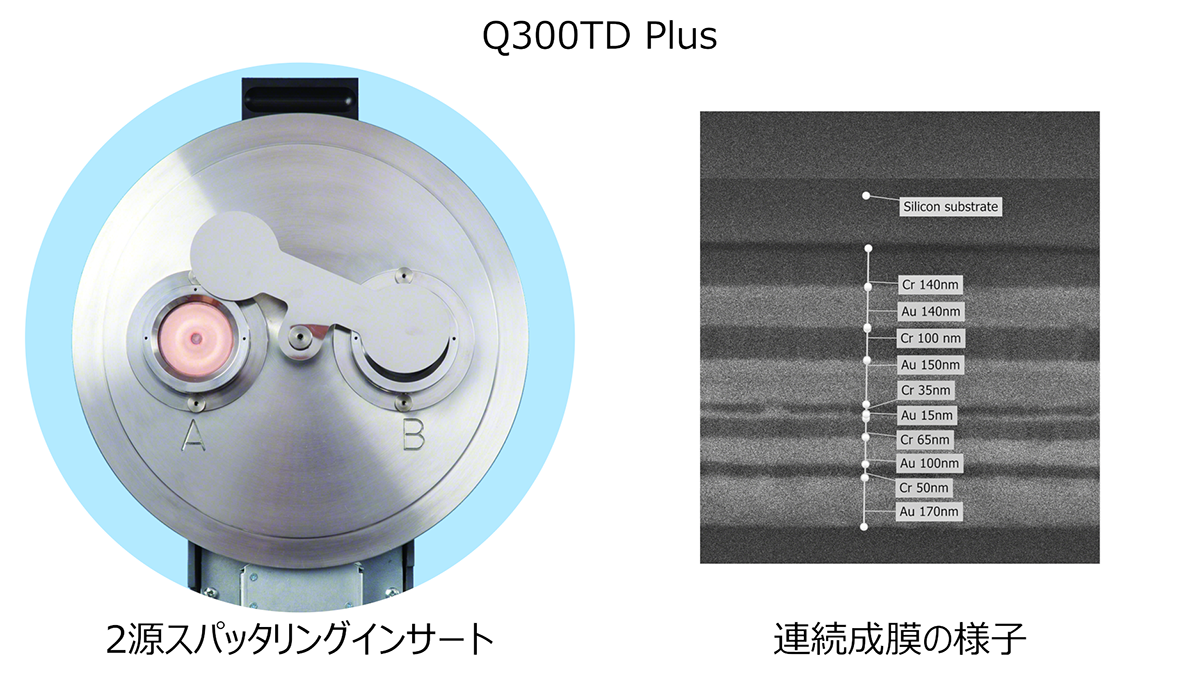
Q300TD Plusは2つの独立したスパッタリングインサートを備えているので、真空を保持したまま2つの異なる金属を連続してスパッタリングできます。例えば、
基板とコーティング膜の密着性を向上させるためにCr成膜後に、Au成膜が可能です。
自動シャッター機構によって、酸化したターゲットの表面クリーニング中やコーティング中の不使用ターゲットを保護します。シングルスパッタリングも
実施可能です。
3源同時スパッタ
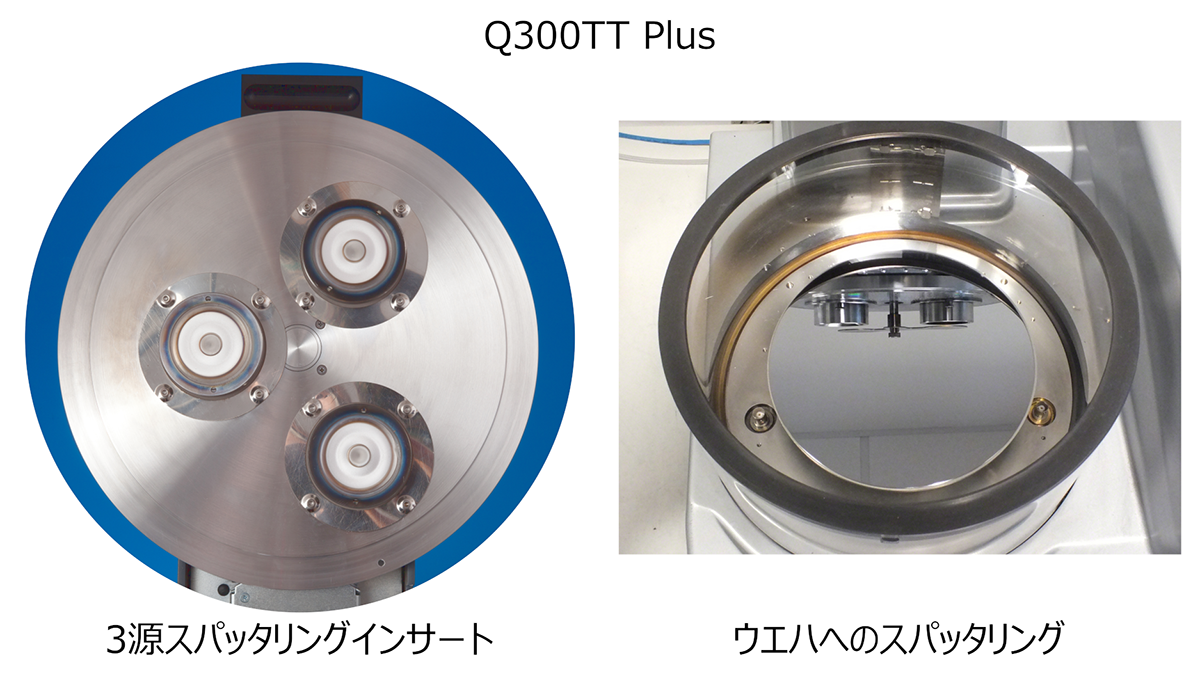
Q300TT Plusは、個々の大型試料または複数の試料を均一にコーティングするために、3つのスパッタリングインサートを搭載しています。
小さな試料を経済的にコーティングするために、「シングルターゲット」モードを選択することもできます。
Q300TT Plusは、SEM、FEG-SEM検査用の大型試料の準備に理想的なコーターです。均一なコーティングを確実にするために、回転試料台と3つの個別の
マグネトロンスパッタリングインサートを搭載しており、低電圧を使用することによってプロセスの効率が向上しています。
防爆シリンダー付着脱可能なシリンダー
ガラスチャンバーは着脱可能で、ベースおよびトッププレートにも手が届きやすく、洗浄が容易です。 敏感な試料のクロスコンタミネーションを避けるためにチャンバーを素早く交換することができます。 オプションのロングチャンバーではカーボン蒸着での試料の熱ダメージを低減し、スパッタリングの均一性を向上させ、 より高さのある試料にも対応することができます。
安全性
QCoatおよびQ300シリーズはCE規格に準拠しています。
スパッタコーター(マグネトロンスパッタ)
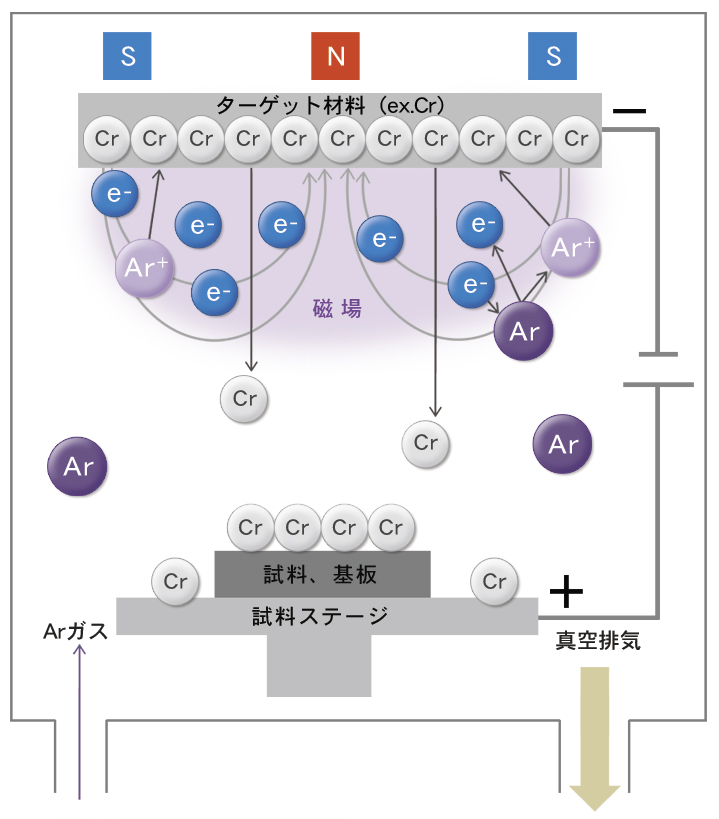
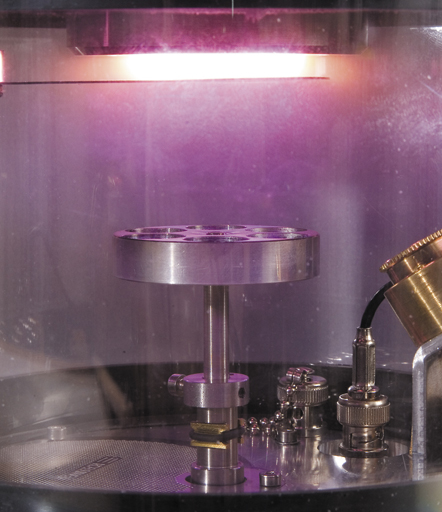
プラズマ放電によりターゲット金属(Au, Cr etc)をスパッタして、試料や基板の表面にターゲット材料を付着・成膜させる装置です。
試料チャンバー内を真空引きした後、不活性ガス(主にArガス)を導入し ターゲットにマイナスの高電圧を印加してグロー放電を発生させます。 プラズマ空間でイオン化したアルゴン(Ar+)は、陰極のターゲットに高速で引きつけられて、ターゲット表面の原子を叩き出します。 叩き出された原子は、対向に配置した試料や基板の表面に付着して薄膜を形成します。
Q Plusシリーズはターゲットの裏面に永久磁石を内蔵したマグネトロン型で、磁場によりターゲット近傍に電子を囲いこむことで、 Ar+の生成効率が増えると同時にターゲットのスパッタ効率を増加し、成膜スピートを速くします。また、イオン衝撃による 試料ダメージを低減する効果もあります。スパッタリングは真空蒸着と比較して、高融点金属の成膜が可能な点や、粒子エネルギーが大きいことにより 付着力が強い、といった利点があります。
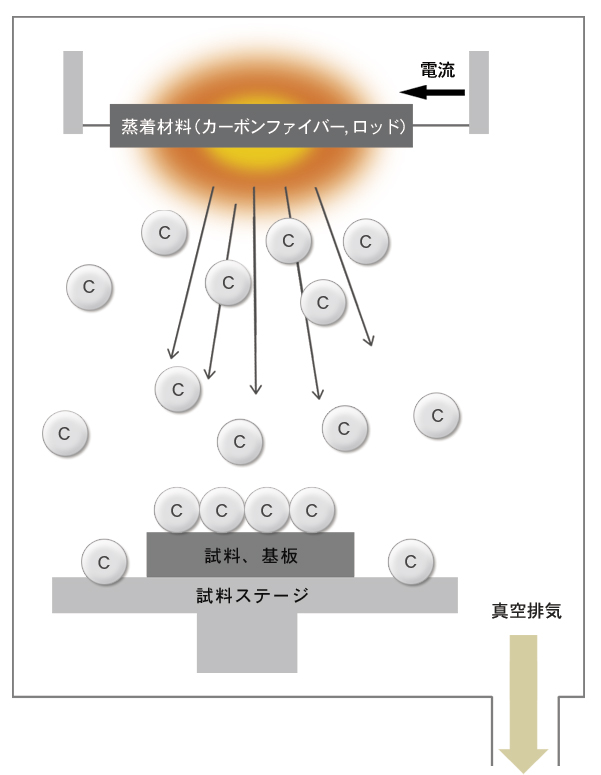
カーボンコーター(カーボン蒸着)
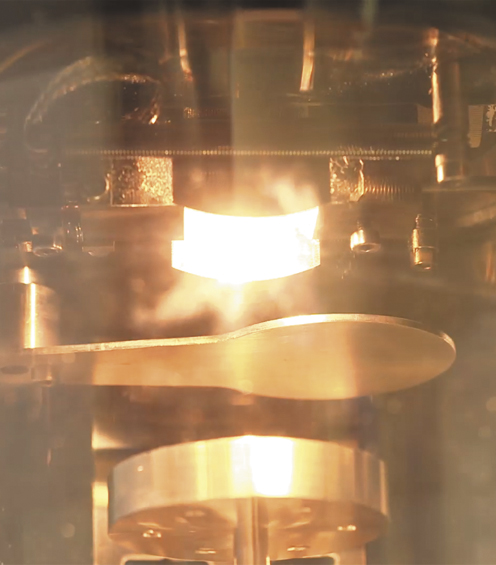
真空蒸着法によりカーボンを成膜します。金属や金属酸化物などの蒸着材料を真空中で加熱して、蒸発または昇華させます。 気体分子になった蒸着材料が試料や基板の表面に付着・堆積して薄膜を形成します。スパッタ法よりも以前から実用化されている方式です。
材料の加熱方法には、抵抗加熱、高周波誘導加熱、電子ビーム加熱などがありますが、Q Plusシリーズでは抵抗加熱式となります。 カーボン蒸着の場合、蒸着源としてカーボンファイバーを編紐にしたものと、ロッド状のものがあります。 いずれも蒸着前に通電して脱ガスし、その後大電流を流してカーボンを蒸発させ、蒸発したカーボンが試料に蒸着されます。
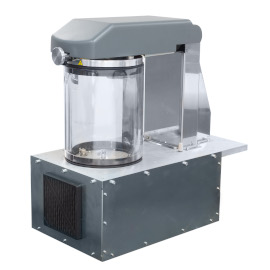
ラインナップ
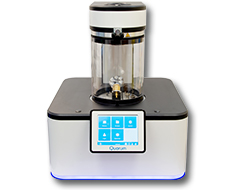
エントリーモデル
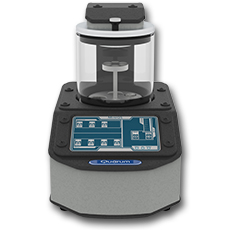
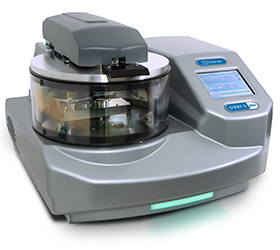
アプリケーション
電子顕微鏡 前処理
- SEM観察 導電処理
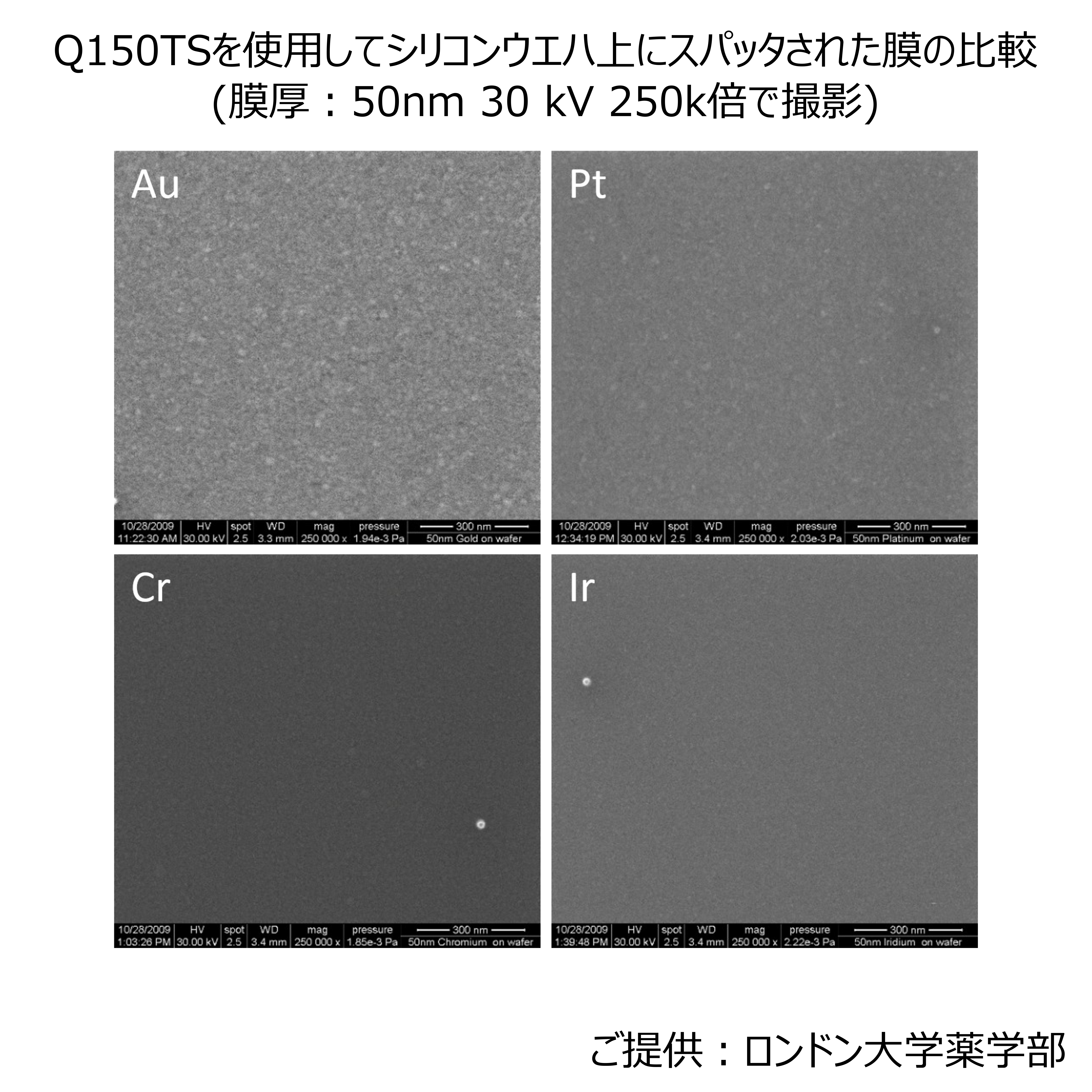
生物試料のような絶縁物試料をSEMで観察しようとすると、チャージアップ(帯電現象)が起こり、正しい像を観察できないことがあります。 帯電防止のためにコーティングを行う場合、一般的には導電性に優れたAuが使用されますが、粒径が大きいため高分解能の観察には不向きです。 粒径の細かさからPtが使用されることもありますが、低真空仕様のスパッタコーターではAuと比較してコーティングレートが遅くなります。
高真空仕様スパッタコーターでは、導電性コーティングのためにCrやIrを選択できます。適正条件で成膜されたCrの粒径はPtよりも細かく、 またターゲットが安価のためFE-SEM観察に最適です。しかし酸化しやすいため、試料の大気保管ができず、コーティング後はすぐに観察する必要があります。 IrはCrと同等以下の粒径で酸化もしないため、同じく高分解能観察向けに推奨されますが、ターゲットは高価になります。
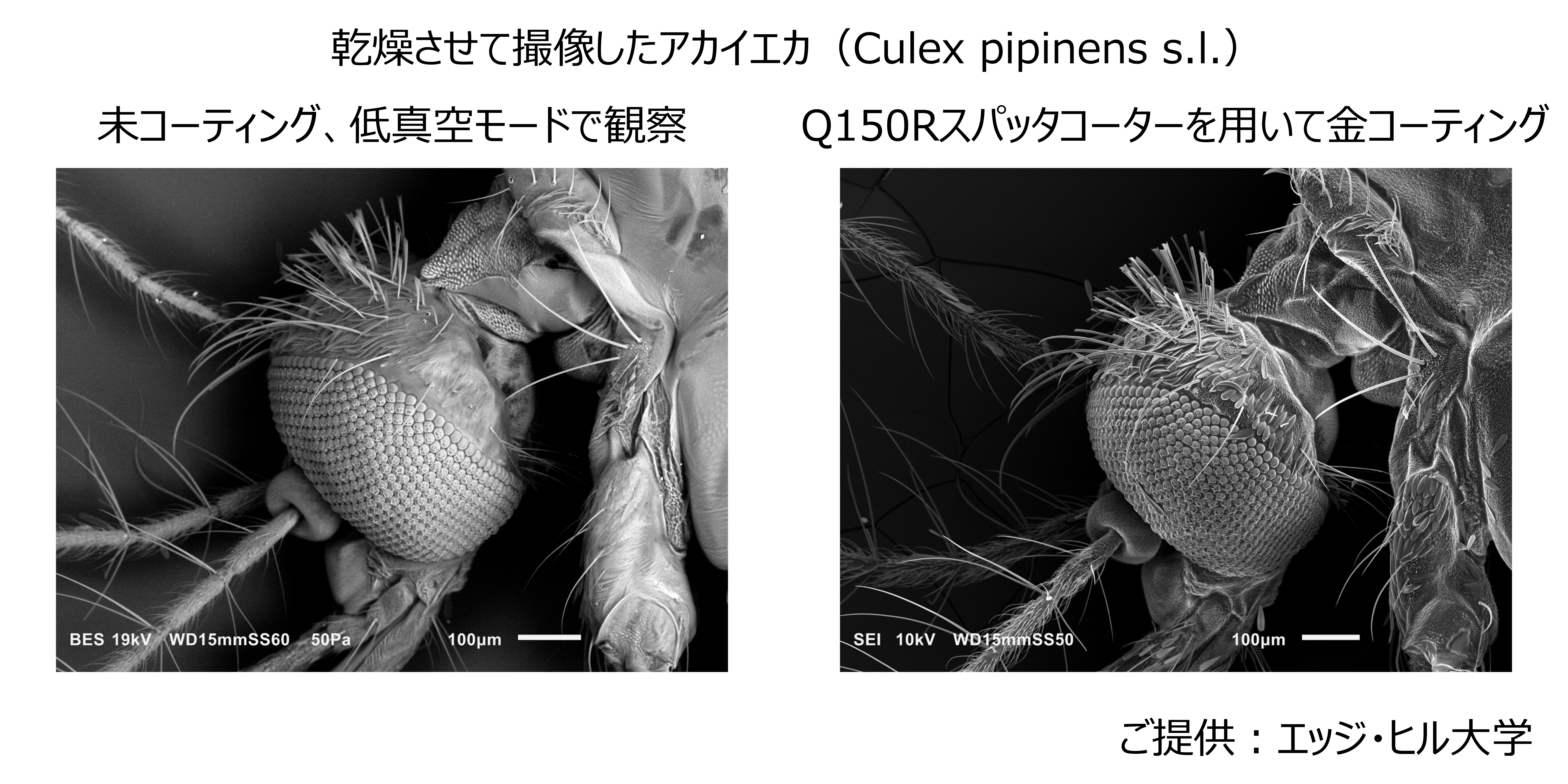
また、低真空SEMでは未コーティングの試料をチャージアップなしで観察することができますが、コーティングを行い高真空中で観察する二次電子像と 比較すると、立体感に欠けた画像になる場合があります。
- X線分析 導電処理
EPMAやEDS,WDSでの元素分析の試料前処理において、AuやPtのような重い元素をコーティングすると、見たい元素のピークを隠し、分析の邪魔に なってしまう場合があります。そのため、一般的には原子番号の小さいカーボンの蒸着が、導電処理として行われます。
- 試料保護膜
数十~数百nmの厚膜をコーティングすることで、FIBやアトムプローブなどの用途における試料への熱ダメージを低減します。
電極作成
電子顕微鏡関連の試料前処理用途以外にも、実験レベルでの薄膜や電極の作成にも適しています。Q300TDでは2元のターゲットを装着可能で、 真空を保持したまま異なる2種類のターゲットを最大5層まで連続して成膜することができます。
論文
サステナビリティ・環境科学
- Cottrell et al. (2025) : Influence of jute fibre and cement on the mechanical properties of raw earth mortar
- Widjaja et al. (2025) : Characterization and experimental modeling of rockwool, hot-sprayed polyurea, and casted polyurea as thermal insulation for heat mitigation in landfill liner
- Tiu et al. (2025) : Hydration mechanism of cement-based composites incorporating ground pond ash: Towards sustainable building and infrastructure solutions
- Joshi et al. (2025) : Flue gas induced lithium carbonate crystallization from industrial black mass
- Tan et al. (2023) : Superhydrophilic and underwater superoleophobic Graphene oxide-Phytic acid membranes for efficient separation of oil-in-water emulsions
- Rosa et al. (2025) : Biochar supported Fe–TiO2 composite for wastewater treatment: Solid-state synthesis and mechanistic insights
- Nizamov et al. (2025) : Optical assessment of lignin-containing nanocellulose films under extended sunlight exposure
- Jayasooriya et al. (2024) : Quality of cellulose and biostimulant extracts from Oedogonium calcareum cultivated during primary wastewater treatment
- Beg et al. (2024) : Recyclable hemp hurd fibre-reinforced PLA composites for 3D printing
- Bredeck et al. (2023) : Saharan dust induces NLRP3-dependent inflammatory cytokines in an alveolar air-liquid interface co-culture model
- Beg et al. (2022) : The effects of alkaline digestion, bleaching and ultrasonication treatment of fibre on 3D printed harakeke fibre reinforced polylactic acid composites
セラミックス、ガラス・繊維
- Cottrell et al. (2025) : Influence of jute fibre and cement on the mechanical properties of raw earth mortar
- Widjaja et al. (2025) : Characterization and experimental modeling of rockwool, hot-sprayed polyurea, and casted polyurea as thermal insulation for heat mitigation in landfill liner
- Starykh et al. (2025) : Quantitative measurement of oxygen by Electron Probe X-ray Microanalysis for estimation of iron oxidation state
- Tiu et al. (2025) : Hydration mechanism of cement-based composites incorporating ground pond ash: Towards sustainable building and infrastructure solutions
- Goulas et al. (2025) : Enabling accessible additive manufacturing of alumina ceramics through formulation design
- Reisinger et al. (2025) : Stereolithography-based 3D printing of silica with solutions without organic binders
- Shi et al. (2025) : Microstructural optimization of Gd2O3-Yb2O3-Y2O3 co-stabilized ZrO2/YSZ coatings with enhanced thermal shock resistance
- Dettlinger et al. (2025) : Optical properties and microstructure of CAD/CAM silicate glass-ceramics with different levels of translucency
- Zygmuntowicz et al. (2025) : Engineered gradient structures in Al2O3-Ni composites: unlocking the potential of centrifugal slip casting for tailored microstructures and surface spinel formation
- Schlacher et al. (2023) : High-temperature fracture behaviour of layered alumina ceramics with textured microstructure
- Gómez-Pérez et al. (2025) : Mechanical and environmental assessment of mortars with high coal-bottom ash replacement from local industry
- Botros et al. (2024) : Influence of Grain Size on the Electrochemical Performance of Li7-3xLa3Zr2AlxO12 Solid Electrolyte
- Xie et al. (2024) : Liquid metal interface mechanochemistry disentangles energy density and biaxial stretchability tradeoff in composite capacitor film
バイオマテリアル・ナノマテリアル
- Bobrova et al. (2022) : Scaffolds Based on Silk Fibroin with Decellularized Rat Liver Microparticles: Investigation of the Structure, Biological Properties and Regenerative Potential for Skin Wound Healing
- Chong et al. (2025) : Enzymatic hydrolysis of palm cellulose to yield nanocrystals with potential roles in lipid and cholesterol digestion and absorption
- McCoubrey et al. (2024) : Poly(D,l-lactide-co-glycolide) particles are metabolised by the gut microbiome and elevate short chain fatty acids
- Tan et al. (2023) : Superhydrophilic and underwater superoleophobic Graphene oxide-Phytic acid membranes for efficient separation of oil-in-water emulsions
- Dziemidowicz et al. (2023) : Development of ibuprofen-loaded electrospun materials suitable for surgical implantation in peripheral nerve injury
- Bobrova et al. (2022) : Scaffolds Based on Silk Fibroin with Decellularized Rat Liver Microparticles: Investigation of the Structure, Biological Properties and Regenerative Potential for Skin Wound Healing
- Czerwińska-Główka et al. (2021) : Electrically-responsive antimicrobial coatings based on a tetracycline-loaded poly(3,4-ethylenedioxythiophene) matrix
- Shen et al. (2026) : Surface-induced stability change of bioengineered antibodies: Insights from QCM-D and neutron reflection
- Colucci et al. (2025) : Bio-based polymer composites obtained by vat photopolymerization of photocurable resins modified with biochar as sustainable filler
- Rosa et al. (2025) : Biochar supported Fe–TiO2 composite for wastewater treatment: Solid-state synthesis and mechanistic insights
- Gu et al. (2025) : Concentric ice-templating of ultracompressible tough hydrogels with bioinspired circumferentially aligned architecture
- Nizamov et al. (2025) : Optical assessment of lignin-containing nanocellulose films under extended sunlight exposure
- Loh et al. (2025) : Enhanced production of bacterial cellulose with a mesh dispenser vessel-based bioreactor
- Dimitrov et al. (2025) : Vivid Structural Coloration in Transparent MXene-Cellulose Nanocrystals Composite Films
- Jayasooriya et al. (2024) : Quality of cellulose and biostimulant extracts from Oedogonium calcareum cultivated during primary wastewater treatment
- Schlacher et al. (2023) : High-temperature fracture behaviour of layered alumina ceramics with textured microstructure
- Ovaskainen et al. (2025) : Optimized dose modulation for controlled greyscale electron beam lithography for negative tone resist
- Imamura et al. (2024) : Complex Assemblies of Colloidal Microparticles with Compliant DNA Linkers and Magnetic Actuation
- Singh et al. (2024) : Antibiotic TMA (Therapeutic Methacrylic) Comonomers: Synergizing Mechanical Integrity with Infection Control in Bone Cement
- Roh et al. (2024) : Transient shuttle for a widespread neural probe with minimal perturbation
- Petřkovský et al. (2024) : Revival of Polyacetylenes in Electronics: Green Light-Emitting Diodes
- Li et al. (2024) : Magnetically Driven Hydrogel Surfaces for Modulating Macrophage Behavior
- Naik et al. (2023) : Villi Inspired Mechanical Interlocking for Intestinal Retentive Devices
- Liu et al. (2023) : Metal 3D nanoprinting with coupled fields
- Willemse et al. (2022) : Hydrogels derived from decellularized liver tissue support the growth and differentiation of cholangiocyte organoids
- Sevcik et al. (2021) : Energy resolved-electrochemical impedance spectroscopy investigation of the role of Al-doped ZnO nanoparticles in electronic structure modification of polymer nanocomposite LEDs
- Morrone et al. (2021) : Incorporation of porous protective layers as a strategy to improve mechanical stability of Tamm plasmon based detectors
- Lee et al. (2020) : Inorganic Nanotube Mesophases Enable Strong Self-Healing Fibers
高分子・ゲル
- Bobrova et al. (2022) : Scaffolds Based on Silk Fibroin with Decellularized Rat Liver Microparticles: Investigation of the Structure, Biological Properties and Regenerative Potential for Skin Wound Healing
- Kuźnia et al. (2025) : Microspheres as a stabilizing element in polyurethane-cork composites
- McCoubrey et al. (2024) : Poly(D,l-lactide-co-glycolide) particles are metabolised by the gut microbiome and elevate short chain fatty acids
- Dziemidowicz et al. (2023) : Development of ibuprofen-loaded electrospun materials suitable for surgical implantation in peripheral nerve injury
- Bobrova et al. (2022) : Scaffolds Based on Silk Fibroin with Decellularized Rat Liver Microparticles: Investigation of the Structure, Biological Properties and Regenerative Potential for Skin Wound Healing
- Czerwińska-Główka et al. (2021) : Electrically-responsive antimicrobial coatings based on a tetracycline-loaded poly(3,4-ethylenedioxythiophene) matrix
- Shen et al. (2026) : Surface-induced stability change of bioengineered antibodies: Insights from QCM-D and neutron reflection
- Colucci et al. (2025) : Bio-based polymer composites obtained by vat photopolymerization of photocurable resins modified with biochar as sustainable filler
- Gu et al. (2025) : Concentric ice-templating of ultracompressible tough hydrogels with bioinspired circumferentially aligned architecture
- Iaccarino et al. (2025) : Insights into the quasi-static mechanics of transversely isotropic polymer foams
- Zhou et al. (2025) : Time-evolved growth of semi-aromatic polyamide nanofilms and their structure-performance relationship: Mechanistic insights and implications for nanofiltration membrane synthesis
- Khakbiz et al. (2025) : AI-based nanotopography of dental adhesives containing TiO2 nanoparticles with enhanced antibacterial and mechanical properties
- Beg et al. (2024) : Recyclable hemp hurd fibre-reinforced PLA composites for 3D printing
- Beg et al. (2022) : The effects of alkaline digestion, bleaching and ultrasonication treatment of fibre on 3D printed harakeke fibre reinforced polylactic acid composites
- Petřkovský et al. (2024) : Revival of Polyacetylenes in Electronics: Green Light-Emitting Diodes
- Li et al. (2024) : Magnetically Driven Hydrogel Surfaces for Modulating Macrophage Behavior
- Xie et al. (2024) : Liquid metal interface mechanochemistry disentangles energy density and biaxial stretchability tradeoff in composite capacitor film
- Herrmann et al. (2024) : On the geometry and material stability of tubular PVDF-TiO2 static mixer membrane contactors for photocatalytic ozonation of micropollutants
- Kim et al. (2024) : Stretchable, transparent and multifunctional PVC-gel heater: a novel approach to skin-mountable, wearable thermal devices
- Willemse et al. (2022) : Hydrogels derived from decellularized liver tissue support the growth and differentiation of cholangiocyte organoids
- Sevcik et al. (2021) : Energy resolved-electrochemical impedance spectroscopy investigation of the role of Al-doped ZnO nanoparticles in electronic structure modification of polymer nanocomposite LEDs
- Lee et al. (2020) : Inorganic Nanotube Mesophases Enable Strong Self-Healing Fibers
食品・植物科学
- Dayan et al. (2026) : Tomato leaf microstructure affects the adhesion and localization of Salmonella enterica as shown using biomimetics
- Wadhwa et al. (2023) : Arabidopsis T-DNA mutants affected in TRDMT1/DNMT2 show differential protein synthesis and compromised stress tolerance
- Chong et al. (2025) : Enzymatic hydrolysis of palm cellulose to yield nanocrystals with potential roles in lipid and cholesterol digestion and absorption
- Madhusankha et al. (2025) : Carbohydrate-based co-encapsulation of spice oleoresin blends: Impact on flavor release profiles, storage stability, and sensory acceptance
- Daza et al. (2024) : Study of the physicochemical properties of hass avocado oil encapsulated by complex coacervation
- Dayan et al. (2026) : Tomato leaf microstructure affects the adhesion and localization of Salmonella enterica as shown using biomimetics
- Wadhwa et al. (2023) : Arabidopsis T-DNA mutants affected in TRDMT1/DNMT2 show differential protein synthesis and compromised stress tolerance
電子・電気工学
- Kochanowska et al. (2025) : Effect of surface preparation on contact properties to high resistivity Cd1-xMnxTe:In
- Botros et al. (2024) : Influence of Grain Size on the Electrochemical Performance of Li7-3xLa3Zr2AlxO12 Solid Electrolyte
- Xie et al. (2024) : Liquid metal interface mechanochemistry disentangles energy density and biaxial stretchability tradeoff in composite capacitor film
電池・燃料電池
- Plass et al. (2024) : Structures and Ionic Transport Properties of Perovskite-Related BIAIIX3 and BIA2IIX5 Halides
- Plass et al. (2023) : Structure and Ionic Conductivity of Li-Disordered Bismuth o-Thiophosphate Li60–3xBi16+x(PS4)36
- Schneider et al. (2022) : Structure Determination of the Crystalline LiPON Model Structure Li5+xP2O6−xN1+x with x≈0.9
- Calaminus et al. (2022) : Enhancing Ionic Conductivity by in Situ Formation of Li7SiPS8/Argyrodite Hybrid Solid Electrolytes
- Geng et al. (2022) : Influence of Chloride and Nitrate Anions on Copper Electrodeposition onto Au(111) from Deep Eutectic Solvents
- Bornman et al. (2025) : A novel current switching device for proton exchange membrane electrolyser characterisation and monitoring
- Botros et al. (2024) : Influence of Grain Size on the Electrochemical Performance of Li7-3xLa3Zr2AlxO12 Solid Electrolyte
動物学
- Kehl et al. (2024) : Single-neuron representations of odours in the human brain
微生物・分子生物学
- Dayan et al. (2026) : Tomato leaf microstructure affects the adhesion and localization of Salmonella enterica as shown using biomimetics
- Tan et al. (2022) : Bi-allelic variants in DNHD1 cause flagellar axoneme defects and asthenoteratozoospermia in humans and mice
- Tan et al. (2022) : Bi-allelic variants in DNHD1 cause flagellar axoneme defects and asthenoteratozoospermia in humans and mice
- Dayan et al. (2026) : Tomato leaf microstructure affects the adhesion and localization of Salmonella enterica as shown using biomimetics
- Moorehead et al. (2024) : Accelerated thermal property mapping of TRISO advanced nuclear fuel
- Ali et al. (2021) : Isolation and Establishment of a Highly Proliferative, Cancer Stem Cell-Like, and Naturally Immortalized Triple-Negative Breast Cancer Cell Line, KAIMRC2
サステナビリティ・環境科学
セラミックス、ガラス・繊維
バイオマテリアル・ナノマテリアル
高分子・ゲル
食品・植物科学
動物学
微生物・分子生物学